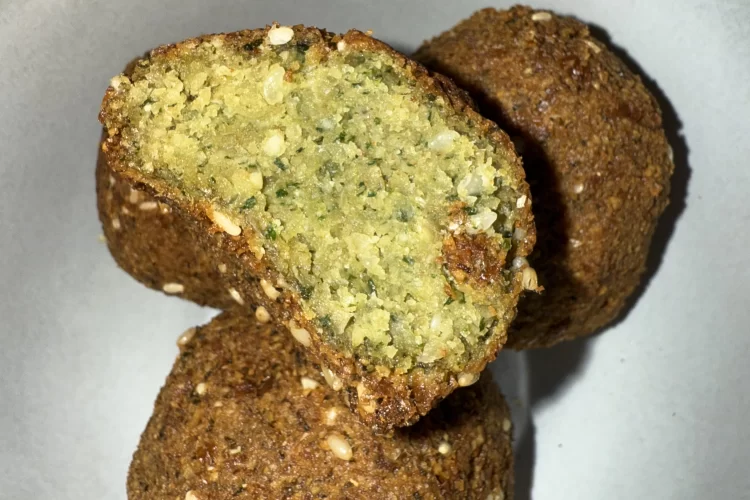
There are some recipes that feel less like cooking and more like preserving a piece of history — and falafel is one of them. These golden, crispy, herb-packed bites have travelled through centuries, cultures, and cuisines, yet the heart of the recipe remains wonderfully unchanged.
And while falafel is now enjoyed in cafés, takeaways and trendy food trucks around the world, nothing beats freshly made falafel from scratch. Especially when it’s done properly — with dried chickpeas soaked overnight, not canned ones. That one step alone is what transforms the texture from soft and pasty to light, fluffy and perfectly crunchy.
Today’s recipe celebrates that traditional method but remains approachable for home cooks. Packed with parsley, coriander, garlic, cumin, coriander, and a touch of harissa paste for warmth, this is falafel exactly as it should be: fragrant, crispy, satisfying, and deeply comforting.
🥙 The Cultural Significance of Falafel
Falafel isn’t just a food — in many parts of the Middle East, it’s a symbol of home, hospitality, and community.
- In Egypt, falafel (known as ta’amiya) is traditionally made with fava beans.
- In Lebanon, Jordan, and Israel, chickpeas are the star ingredient.
- In Syria and Palestine, falafel is often served with zingy pickles and deeply flavoured tahini sauce.
Street vendors across the Middle East prepare falafel fresh every morning, frying it in giant roaring pans of oil and serving it warm in pita bread to busy commuters, families, school children, and workers.
What makes falafel truly special is how universal it has become. Without being altered or diluted — falafel remains proudly plant-based, affordable, and accessible. That’s part of its power: it proves that simple, humble ingredients can create something extraordinary.
🌿 Why Soaked Chickpeas Matter
If you’ve ever tried making falafel with canned chickpeas and ended up with mushy patties that collapse in hot oil — you’re not alone. It’s a common mistake.
Dried chickpeas work because:
- They hold their structure much better.
- They absorb flavours more effectively.
- Their starches create an airy, delicate crumb after frying.
- They prevent sogginess and give that signature falafel crunch.
Soaking chickpeas also improves digestibility and nutrient absorption — another natural benefit of doing things the traditional way.
👨🍳 Method
Step 1: Soak the Chickpeas
Cover dried chickpeas with cold water and leave 12–24 hours. They will double or even triple in size. Drain well.
Step 2: Blend the Mixture
Pulse chickpeas in a food processor with onion, garlic, herbs, spices, baking powder and harissa until the texture is like coarse grains of sand — NOT a paste.
Add chickpea flour only if the mixture feels crumbly.
Chill 30–60 minutes.
Step 3: Shape
Form small balls or discs and press gently. Roll in sesame seeds if desired.
Step 4: Fry
Fry gently in medium-hot oil until golden (3–4 minutes per side).
Drain well.
🥗 How to Serve
Falafel is incredibly versatile. Try:
- In pita with lettuce, tomato and tahini
- In rice bowls with roasted veg and hummus
- With flatbread and garlic yoghurt
- Crumbled on salads with feta and olives
- As part of a mezze board with:
- baba ganoush
- halloumi
- olives
- tabbouleh
- pickles
For extra freshness, drizzle with lemon juice just before serving.
❤️ Health Benefits
Falafel is proof that comfort food can also be nutritious.
- High in plant-based protein — ideal for vegetarians and vegans
- Rich in fibre — supporting digestion and fullness
- Packed with antioxidants from herbs and spices
- Naturally gluten-free when made with chickpea flour
- Low-cost, highly nutritious and sustainable
Using an air fryer or baking reduces oil, making it a lighter option while retaining flavour.
🔧 Troubleshooting & Tips
| Problem | Cause | Fix |
|---|---|---|
| Falafel falls apart | Too wet or too smooth | Add chickpea flour + chill |
| Not crispy | Oil not hot enough | Heat oil to medium high |
| Too dense | Over-processed | Blend less — keep texture chunky |
| Dry inside | Overcooking | Shorten frying time |
❓ FAQs
Can I make these ahead?
Yes — shape the mixture and refrigerate up to 2 days before cooking.
Can I freeze them?
Absolutely. Freeze shaped falafel raw or cooked.
Can I air fry them?
Yes — 180°C for 12–15 minutes with light oil spray.
🧺 Storage
- Fridge: 4 days
- Freezer: 3 months
- Reheat: Air fryer or oven — don’t microwave or they go soft
🧮 Nutrition (per falafel, fried)
- Calories: ~85 kcal
- Protein: 3.5g
- Carbs: 9g
- Fat: 4g
- Fibre: ~2g
Values vary based on oil absorption and serving size.
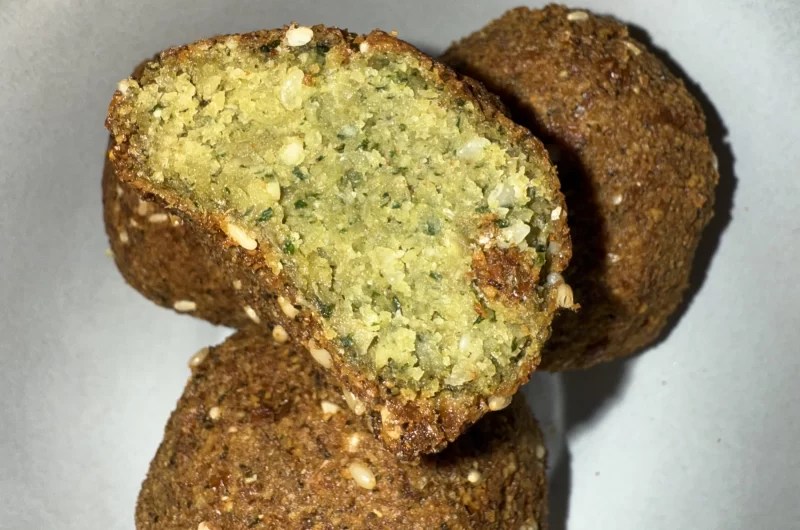
Crispy Homemade Falafel
Course: MainsDifficulty: Easy22
servings85
kcalIngredients
- Base
250g dried chickpeas
Cold water (for soaking)
- Falafel Mix
1 small onion, roughly chopped
4 cloves garlic
Large handful parsley (approx. ½ cup)
Large handful fresh coriander (approx. ½ cup)
1 tsp ground cumin
1 tsp ground coriander
½–1 tsp harissa paste (optional but adds depth)
1 tsp salt
½ tsp black pepper
½ tsp baking powder
2–3 tbsp chickpea flour (only if needed to bind)
Optional: sesame seeds for coating
Oil for shallow or deep frying
Directions
- Soak the Chickpeas
Cover dried chickpeas with cold water and leave 12–24 hours. They will double or even triple in size. Drain well. - Blend the Mixture
Pulse chickpeas in a food processor with onion, garlic, herbs, spices, baking powder and harissa until the texture is like coarse grains of sand — NOT a paste.
Add chickpea flour only if the mixture feels crumbly.
Chill 30–60 minutes. - Shape
Form small balls or discs and press gently. Roll in sesame seeds if desired - Fry
Fry gently in medium-hot oil until golden (3–4 minutes per side).
Drain well.